
Journal | The Latest Scientific Research
Why Chasing Energy Never Fixes the Foundation
Energy is often the first thing to improve, but it is also the easiest signal to misread. Output can increase while the underlying system remains unstable, which explains why progress stalls even w...
Read moreNormal Bloodwork, Persistent Symptoms: What Labs Don’t Measure
Your lab work came back normal, but you still feel off. Blood tests measure clinical cutoffs, not performance optima—and reference ranges reflect population averages.
Read moreWhy Your Supplements Stopped Working After 35
You’re eating well. You’re taking supplements. And yet the results don’t feel the way they used to. This article explains why supplements still work after 35, just within a different biological mod...
Read moreBest Supplements for Cellular Energy (Not a Buzz)
Caffeine borrows energy. CoQ10, PQQ, B vitamins, and magnesium support the mitochondria that make it.
Read moreHow to Support Mitochondrial Function: Inputs That Matter
Training, temperature stress, fasting windows, and nutrients like PQQ and CoQ10—inputs that feed cellular energy capacity.
Read moreSelenium Deficiency Symptoms: The Thyroid and Immunity Connection
Can't lose weight despite trying everything? Getting sick all the time? You might have selenium deficiency. Learn the 7 warning signs of low selenium and how to restore your levels with the right f...
Read moreRhodiola Benefits: Energy, Fatigue, and Mental Performance
For decades, Soviet scientists kept rhodiola research classified, using it to enhance performance in Russian military personnel, cosmonauts, and Olympic athletes. This adaptogenic herb fights fatig...
Read moreTaurine: Membrane Stability for Brain and Heart Cells
Taurine levels fall with age. This amino acid supports membrane stability, calcium handling, and cellular energy resilience under stress.
Read moreMethylcobalamin vs Cyanocobalamin: Active B12 vs Precursor
Cyanocobalamin needs conversion; methylcobalamin is ready to use. Form matters as much as dose for energy and focus.
Read moreMethylfolate vs Folic Acid: Active Form vs Precursor
Folic acid needs conversion; methylfolate is already active—especially relevant when MTHFR variants slow that step.
Read morePersistent Fatigue and Mitochondrial Nutrient Gaps
Deep, unrelenting fatigue often reflects cells that can't keep up ATP demand. Nutrient cofactors for mitochondrial function are one lever.
Read moreCoQ10: The Electron Carrier Your Mitochondria Need
CoQ10 supports cellular energy production in high-demand tissues and acts as a lipid-soluble antioxidant in membranes.
Read more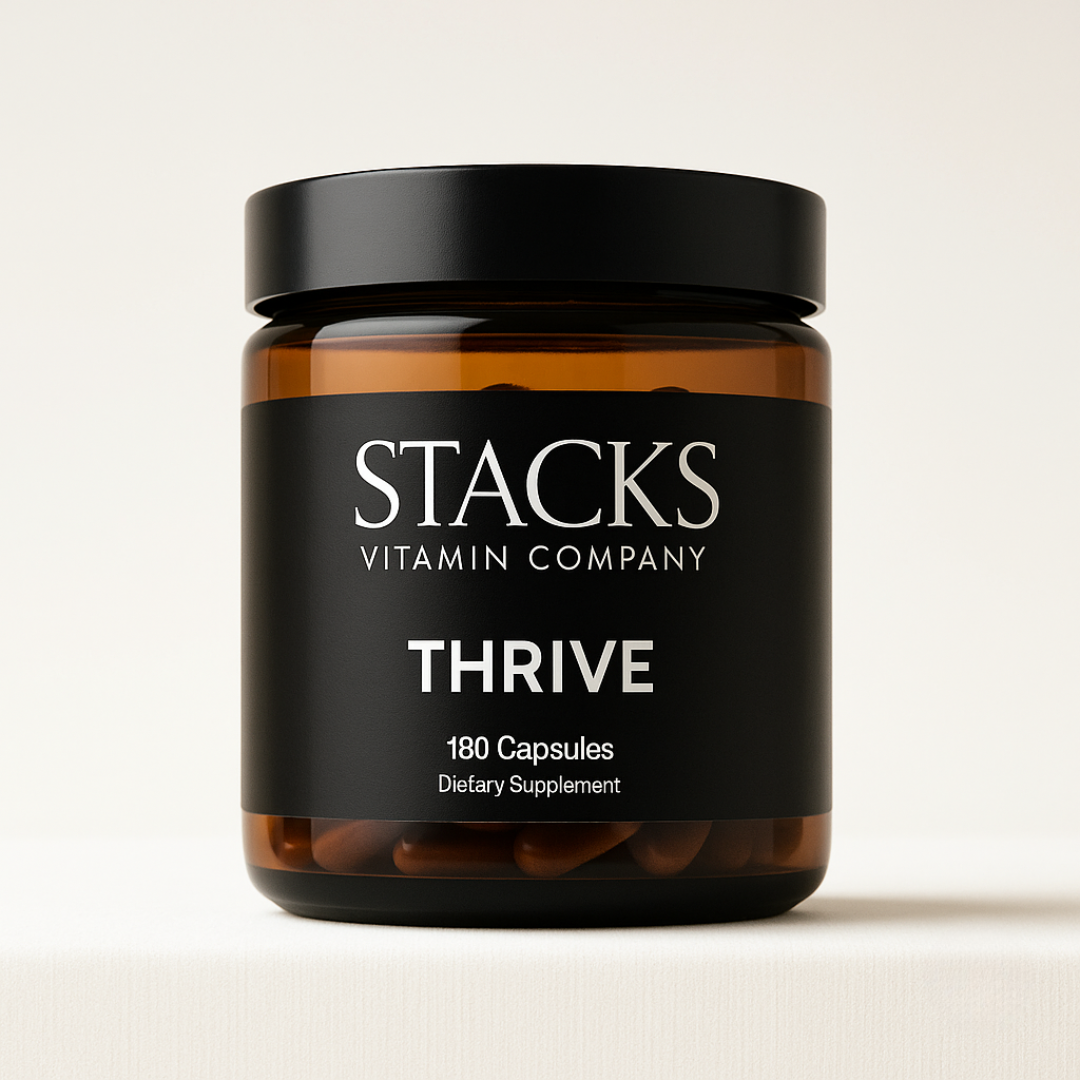
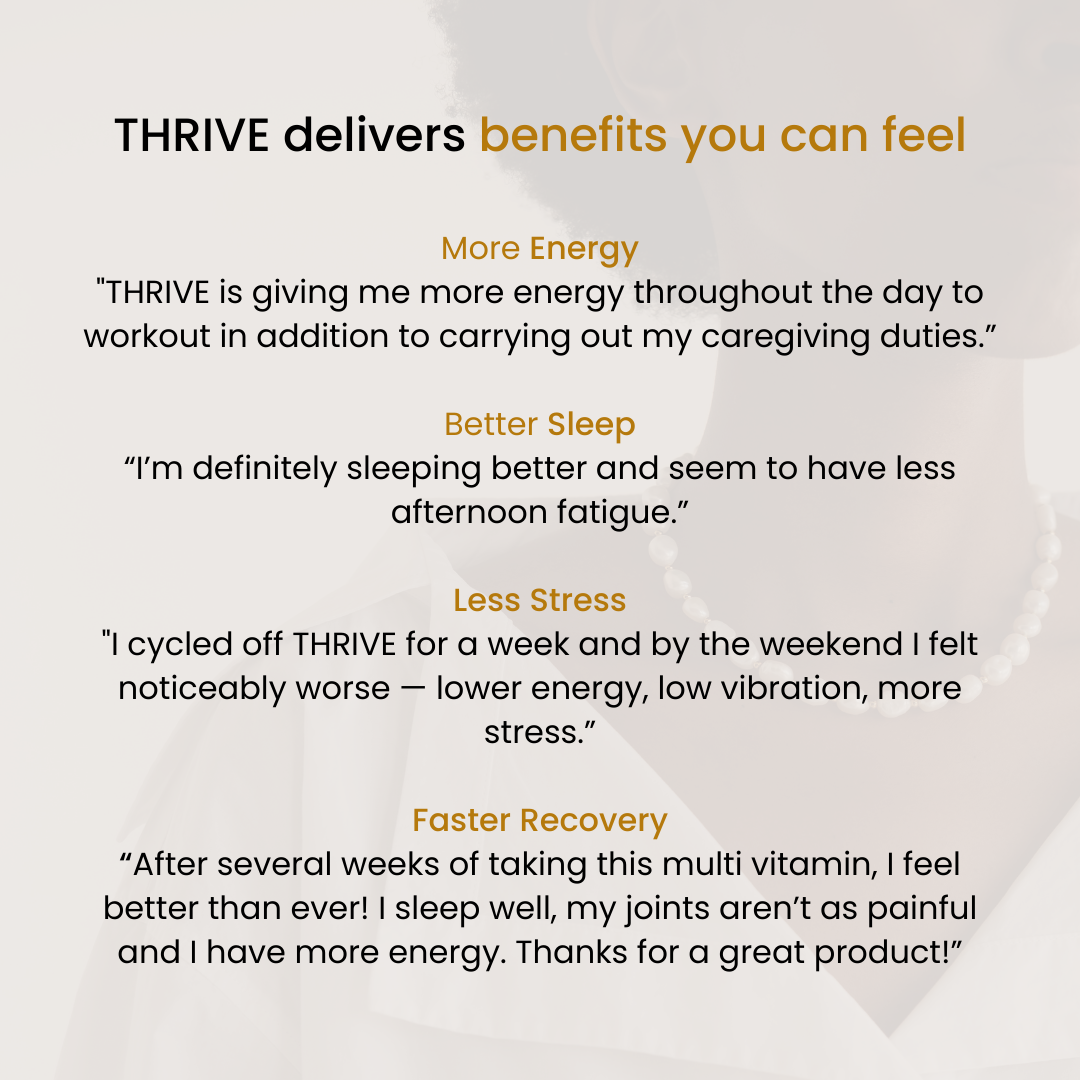
The multivitamin you actually feel.
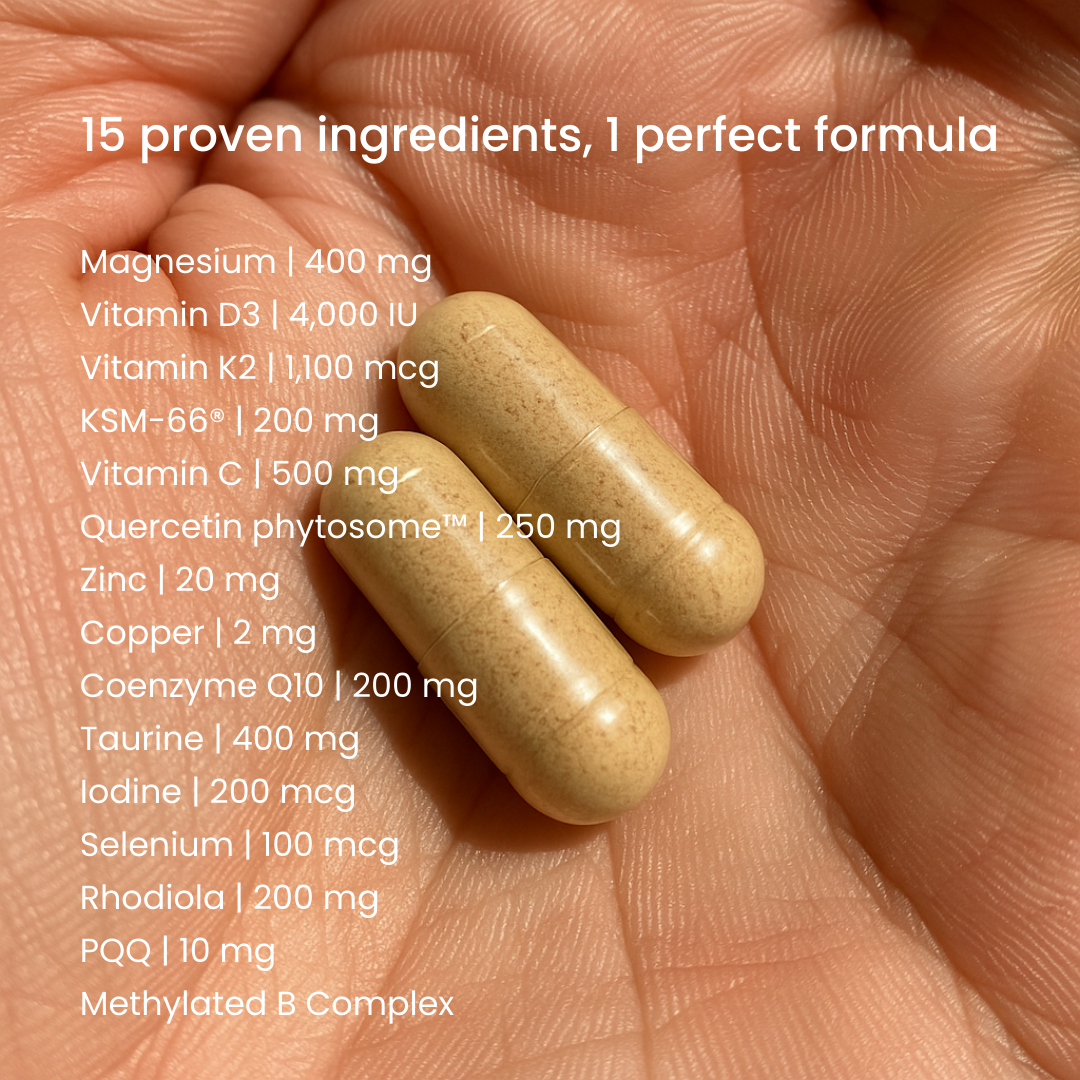
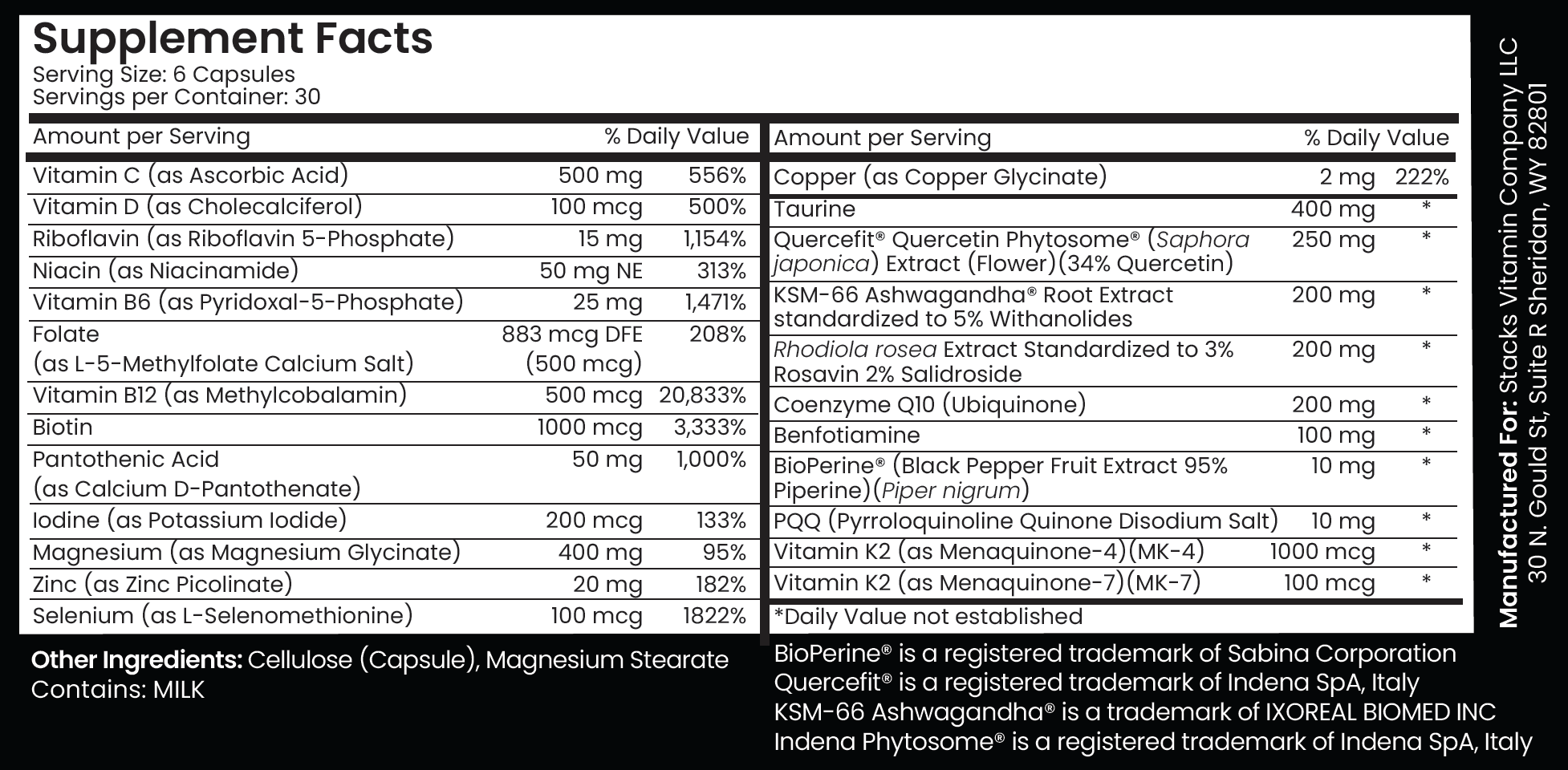
Most multivitamins are dosed to check a box. THRIVE is dosed to change how you feel and function. Fifteen ingredients at real doses, in forms your body can actually use. Everything you need in one bottle.
$89.99 | 30-day supply | 180 capsules
Subscribe & save 10%: $80.99 per month!